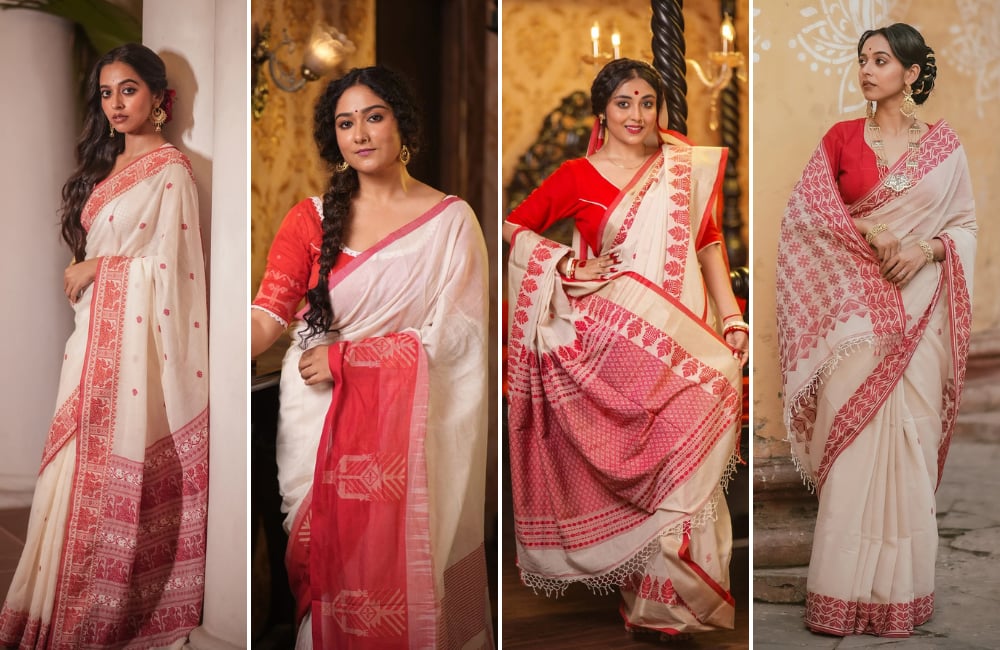
When one envisions Kolkata, they think of the city’s delicious cuisine, the notable Howrah Bridge in the skyline, and the extensive cultural heritage. However, for those who love traditional Indian sarees, they know how resplendent Bengal handloom sarees are!
The saree connoisseurs are particularly attracted by the timeless beauty of lal par sada Jamdani sarees.
The classic design of pristine white fabric edged by a bright red border is an archetype of everything Bengali! It not only looks exquisite, but it also reflects the cultural significance and grace of handloom jamdani sarees in Kolkata.
Table of Contents
The Cultural Significance of the Red and White Handloom Jamdani Saree
The women of Bengal choose the classic lal par saree for many occasions. The cultural significance of this variety is rooted in the culture’s symbolism. White represents auspiciousness and purity, while red symbolises celebration. So, it’s obvious this saree is adorned for special occasions only!
Particularly for married women, they choose this red and white pure cotton Jamdani saree for religious rituals. This isn’t done just for aesthetic purposes. The saree becomes a sign of their marital status, matching well with the conch shell shakha and red coral pola. Finally, the red sindoor completes the attire, creating a timeless combination.
Truly, it reflects just how long this tradition has endured. A woman today will do it, her mother has done it, her grandmother too, and maybe even further up the list of married female ancestors! It might have started out in the realm of opulent zamindar houses in the 18th century, but today, everyone can wear it, no matter what strata of society they belong to.
When Do Bengalis Wear the Red and White Handloom Jamdani Saree?
Durga Puja
The classic lal par sada saree is unavoidable during Durga Puja. The celebration of Devi Durga vanquishing evil is incomplete without it! Especially during Ashtami Anjali and Dashami. Married women of all ages will appear through the dhunuchi smoke, looking powerful and resplendent in the saree.
Weddings
The lal par sada saree paired with a luxurious Jamdani blouse is a common part of the Bengali bridal trousseau. Symbolising love, new beginnings, and purity, this saree is worn during certain wedding rituals. The bride adorns this saree for the dodhimongol ritual, which is the bride’s last meal before the wedding ceremony begins. She might wear it for the gaye holud as well. Married women of her family may wear the same for the ritual.
Traditional Celebrations
Yes, the saree isn’t limited to religious or marital occasions alone! The best saree shops in Kolkata sell this variety throughout the year. Bengali women often wear it for celebrations such as cultural events, birthdays, and anniversaries. The red and white saree with minimal gold jewellery is just beautiful for every occasion!
Types of Lal Par Sada Saree
While the Jamdani version of the red and white saree is much beloved, there are other options available as well. If you’re looking for sophisticated designs, brands such as Katha: A Tale of Weaves are a great choice. They are working closely with artisan communities to breathe new life into this legacy.
Some other popular varieties include:
- Tussar
Naturally shiny and slightly rough to the touch, Tussar silk sarees in this colour combination are striking. Technically, it doesn’t remain white, but the effect of a Tussar red and white saree at any event is undeniable.
- Begampuri
The Begampuri lal par saree is slightly less opulent. But it is still intricate and beautiful, making it great for slightly more casual occasions. Originating from a small town of Begampur in Bengal, these sarees are made from pure cotton, which makes them great for summer.
- Baluchari
Baluchari lal par sada sarees flaunt intricate patterns and motifs inspired by folklore and mythology. This weave is the pride of Bengal! The Baluchari variety is a huge favourite during Durga Puja and wedding ceremonies. Fashion trends are ephemeral–here today, gone tomorrow! But the eternal elegance of lal par sada Jamdani sarees has stayed. The newly married woman would adorn it for Dashami sindoor khela. The mother of the bride will get a Baluchari lal par for her daughter’s wedding. So, go on, drape yourself in rich heritage and incredible beauty!